Newsling gives students a shared way to begin the school day. Guided by a teacher, they explore a story, form their own views, listen to others, and write down what they think.
Every school day begins with 20 minutes of Newsling. Guided by their teacher, students explore a story from the world around them and learn to think for themselves while considering others. Schools can make Newsling part of homeroom, advisory, class-teacher time or their morning meeting.
Explore the story. Ask questions and examine the evidence.
Share your thinking and consider different points of view.
Hear others with curiosity and respect, especially when you disagree.
Put your thoughts into words. Explain your reasons and reflect on what you heard.
Three learning cohorts
Grades 5–6
Grades 7–8
Grades 9–12
The same topic is developed with different reading depth and questions for each cohort.
The full edition is available during a demonstration.
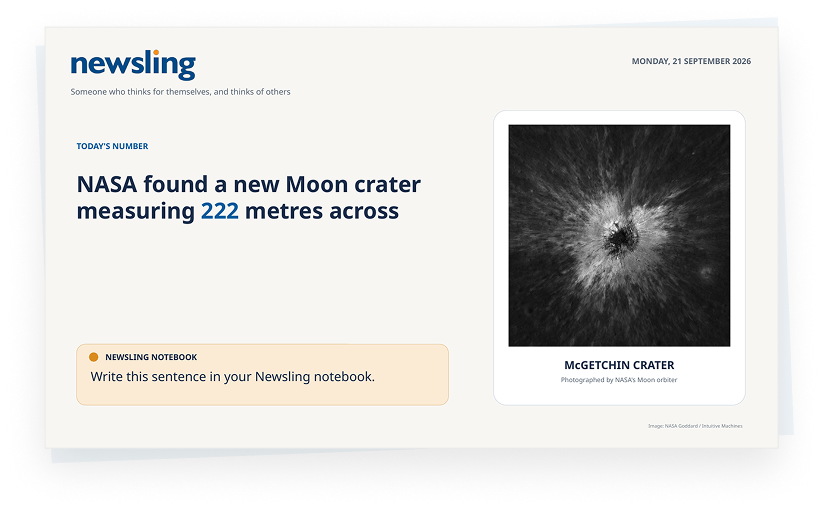
September 21, 2026 · Grades 5–6 · Edition cover
Today’s Number, Today’s Word, a current story and a notebook response
A sketch gives students another way to observe and express an idea
A prompt invites children and families to exchange perspectives over the weekend
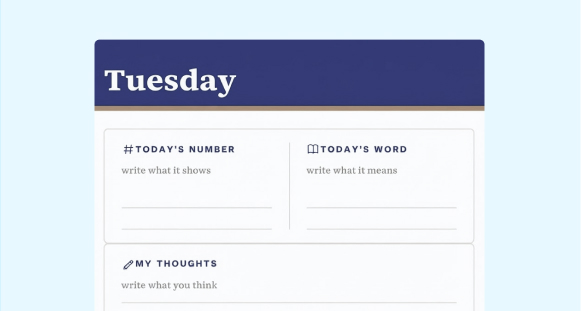
Every Newsling student has a notebook to record questions, explore ideas and put their thoughts into words. Writing gives children a moment to reflect on what they've heard and form their own views.
On Fridays, a question invites children to continue the conversation with their families over the weekend.
Teacher lead each Newsling session, encouraging students to ask questions, share their views and listen to one another. Newsling fits into the school day without becoming another subject to teach.
Teachers review the day’s story and discussion prompts before class begins.
The Teacher Foundation provides a two-hour introductory session and practical supporting material before teachers begin.
We choose stories that matters in the world today, can be understood by children, and invite them to ask questions, weigh evidence and consider different perspectives.
Journalists research each story, verify the facts and develop age-appropriate editions with context and questions.
Psychologists review developmental suitability, emotional sensitivity and opportunities for critical thinking and kindness.
Teachers review clarity, reading level and discussion questions to make each edition work in the classroom.
Guided by their teachers, students think, discuss, listen and write during a 20-minute daily session.
Teachers share feedback every day, helping Newsling refine future editions and improve the classroom experience.
Everyone focuses on the same story, without personal devices or individual feeds. This creates space for shared attention, discussion and learning from one another.
Writing gives every child a chance to develop their own response, even if they don't speak in class. It helps students reflect on what they've heard and explain what they think.
A question on Fridays encourages children to continue the conversation at home, listen to their family's experiences and explore different perspectives.
The world is loud. A classroom can be a space to slow down, make sense of it, and ask better questions.
No individual devices
No student accounts
No student data
No videos
No ads or feeds