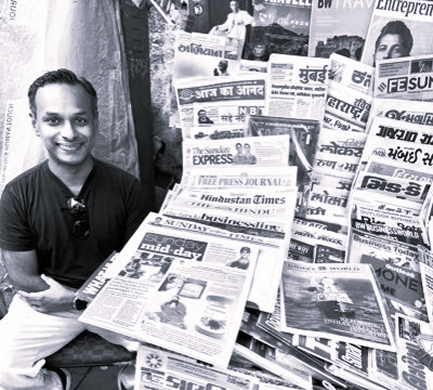
Founder, Newsling
I began reading newspapers at the age of eight. As a teenager, I wrote letters to the editor and experienced the thrill of seeing them make it into print. While still in college, I joined The Indian Express. I later worked at The Times of India, Hindustan Times and Network18, eventually moving to the business side of news.
I spent nearly a decade in the United States, working at Meta, Google and TikTok. At Meta, my work included news, trust, misinformation and efforts to build common ground. At Google, I worked on Discover and how people encounter news and information. At TikTok, I saw how creative expression could draw people into unfamiliar subjects. Across these experiences, I came to appreciate how profoundly technology shapes what people notice, believe and discuss.
I began with newspapers. A child today may first encounter a major event through a feed, a short video, a search result or an AI answer. Wherever that encounter happens, children need the skills to examine what they see, decide what deserves belief and discuss it with others.
Education was also part of the fabric of my home: both my parents were teachers. As my own children grow older, these questions have become more personal. When I looked for ways to help them engage with the world, I found fewer suitable options than I expected.
Mainstream journalism was rarely designed with children in mind. It assumed background knowledge they did not yet have, while many products designed for children meant another device. Others simplified events so much that the complexity and nuance disappeared, leaving little room to question, consider different perspectives or form an independent judgment.
I began to wonder whether the opportunity was not simply to make information easier for children, but to use what is happening in the world as raw material for building critical thinking and cultivating kindness.
I have since learned that the two strengthen each other: thinking for yourself requires the humility to consider other perspectives, while thinking of others does not mean surrendering your own judgment.
That conviction became Newsling.
I also knew that my own experience could provide only a starting point. Old friends, former colleagues and people I've met along the way have contributed ideas, introductions, questions and generous amounts of time. Their involvement has brought educators, psychologists, researchers, journalists and specialists in technology and child safety into the work, shaping Newsling at every stage.
Newsling combines simplicity with intellectual depth: a straightforward classroom practice with evidence to examine, different perspectives to consider and questions worth discussing. Students participate actively, teachers see children contributing with greater care and confidence, and the emerging evidence gives us reason to be optimistic.
This is still the beginning. We intend to deepen the practice, strengthen the evidence and bring Newsling to more classrooms without losing what makes it valuable. At Newsling Labs, we will listen closely, collaborate openly and keep improving.
We also want this work to contribute to a larger understanding of how journalism, education and research can help children develop a healthier relationship with information.
If you have expertise to contribute, questions worth exploring or a perspective that could strengthen the work, I would be glad to hear from you.
A world where children grow into people who think for themselves and think of others.
To help more children develop critical thinking and kindness through daily, teacher-guided conversations about the world.